This is how Google Maps changed the world!
Two decades ago, getting lost was a standard part of the human experience. Today, it takes effort.

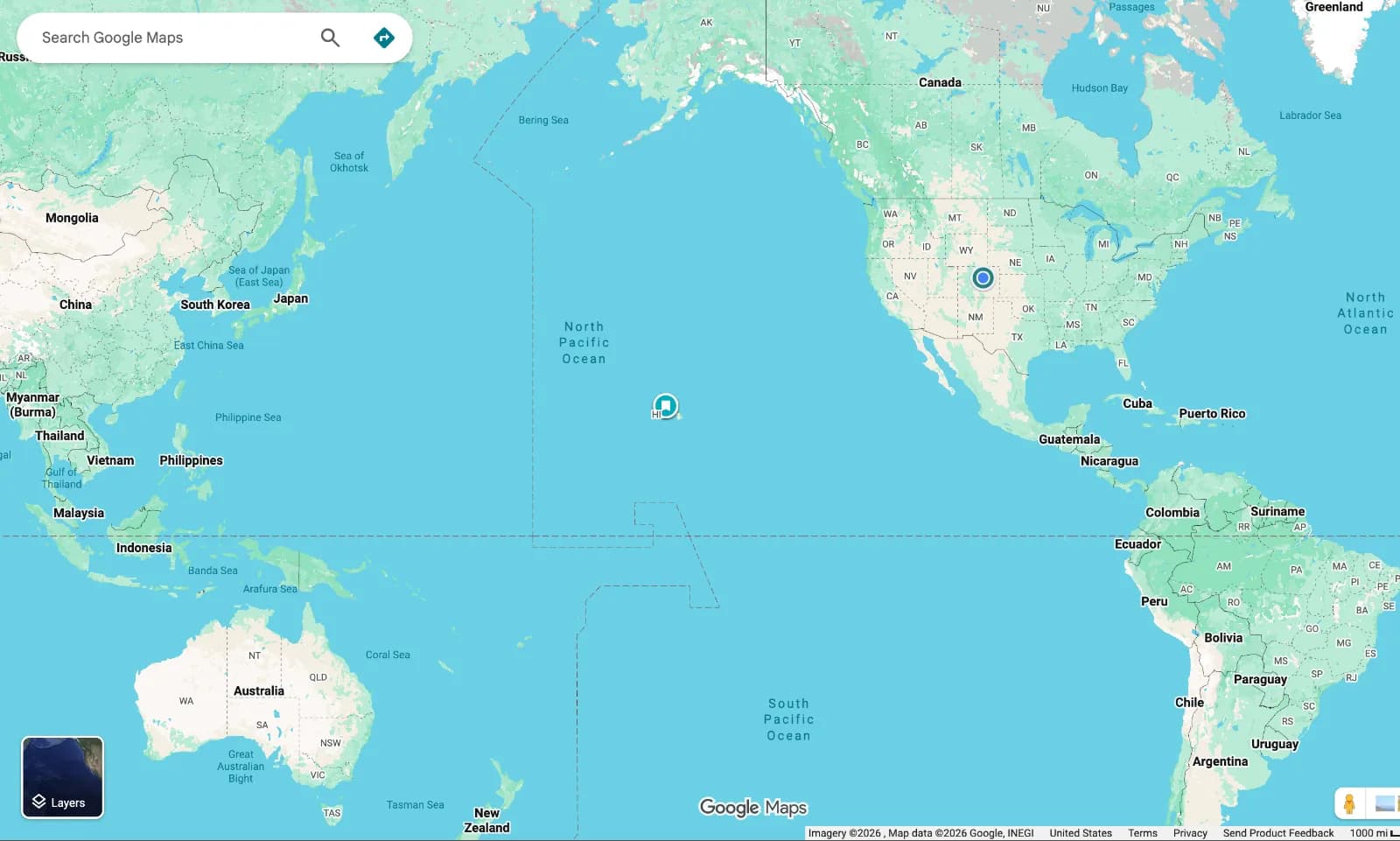
Remember the Thomas Guide? Or the frenzied anxiety of trying to read a highlighted paper map while merging onto a sprawling multi-lane highway? If you are a millennial or older, you likely remember the ritual of printing out MapQuest directions—a stack of printer paper sitting on your passenger seat, instantly rendered useless if you missed a single turn or hit a detour.
Then, in February 2005, a quiet revolution began. Based on a C++ program built by two Danish brothers (Lars and Jens Eilstrup Rasmussen) at a startup called Where 2 Technologies, Google launched a new web mapping service. It was fast, it was intuitive, and crucially, you could drag the map with your mouse without reloading the webpage.
It was a technological marvel for the early web. But no one could have predicted how profoundly Google Maps would rewire the modern world. It didn’t just replace paper maps; it fundamentally altered human behavior, spawned entirely new economies, and built a digital twin of our planet.
Here is how that little blue dot changed everything.
1. The Death of the Dedicated GPS
Before Google Maps went mobile, turn-by-turn navigation was a luxury. You had to buy a dedicated, expensive piece of hardware from companies like Garmin or TomTom, mount it to your windshield, and occasionally pay to update its software via a USB cable so it knew about new roads.
When Google brought free, turn-by-turn navigation to smartphones (starting heavily with Android in the late 2000s), it democratized wayfinding. Suddenly, anyone with a cellular connection had a world-class navigator in their pocket. It made the dedicated consumer GPS industry obsolete almost overnight, turning what was once a premium physical product into a baseline feature of modern existence.
2. The Invisible Engine of the Gig Economy
When we think of Google Maps, we think of an app. But its true world-changing power lies in its API (Application Programming Interface). Google allowed other developers to build their own software on top of its mapping infrastructure.
Without the Google Maps API, the modern gig economy simply does not exist.
Uber and Lyft could not connect drivers and riders without real-time routing.
DoorDash and UberEats rely on Maps to optimize delivery times and route drivers to your doorstep.
Airbnb uses mapping infrastructure to help users visualize neighborhoods and proximity to landmarks.
Google Maps transformed from a consumer tool into the invisible, foundational infrastructure of the modern digital economy. It became the literal bedrock upon which billion-dollar startups were built.
3. Street View and the Digital Twin
In 2007, Google introduced Street View, an impossibly ambitious project to photograph every street in the world. Fleets of cars equipped with 360-degree cameras began driving through major cities, eventually expanding to rural dirt roads, the base camp of Mount Everest, and the pathways of the Grand Canyon via backpack-mounted cameras.
Street View changed our relationship with physical distance. Planning a move to a new city? You can virtually walk the neighborhood before signing a lease. Going to a job interview? You can check what the building entrance looks like the night before. While it sparked massive (and valid) debates about privacy—forcing Google to blur faces and license plates—it essentially created a visual "digital twin" of Earth, making the vastness of the globe feel intimately accessible.
4. Rewiring Human Spatial Awareness
Perhaps the most profound change Google Maps brought upon the world is entirely psychological. It changed how our brains process space.
Historically, humans navigated by building "cognitive maps"—mental representations of our physical environment based on landmarks, routes, and cardinal directions. Today, we suffer from what some researchers call digital amnesia. Because we trust the algorithm completely, we no longer pay attention to our surroundings in the same way. We don't memorize the route; we just obey the voice telling us to "take the next right."
We have outsourced our spatial awareness to our phones. We are rarely lost, but we rarely know exactly where we are. We exist in a constant state of relative positioning—we only know where we are in relation to the blue dot on the screen.
The Road Ahead
Today, Google Maps is far more than a navigation tool. It is a local search engine, a review platform, a transit coordinator, and an augmented reality explorer. With the integration of AI, the map is becoming predictive—warning us of traffic jams before they happen, suggesting eco-friendly routes to save fuel, and updating business hours in real-time based on live foot traffic.
Looking back, the legacy of Google Maps isn't just that it digitized the atlas. Its legacy is that it bridged the gap between the digital world and the physical one, reshaping our economies, our daily habits, and our very perception of the planet we call home.
We traded the romance of getting lost for the efficiency of always being found. And the world hasn't been the same since.




Responses (0)