Google Maps: Why We Can No Longer Imagine a Life Without!
Two decades ago, getting lost was a standard part of the human experience. Today, it takes effort.

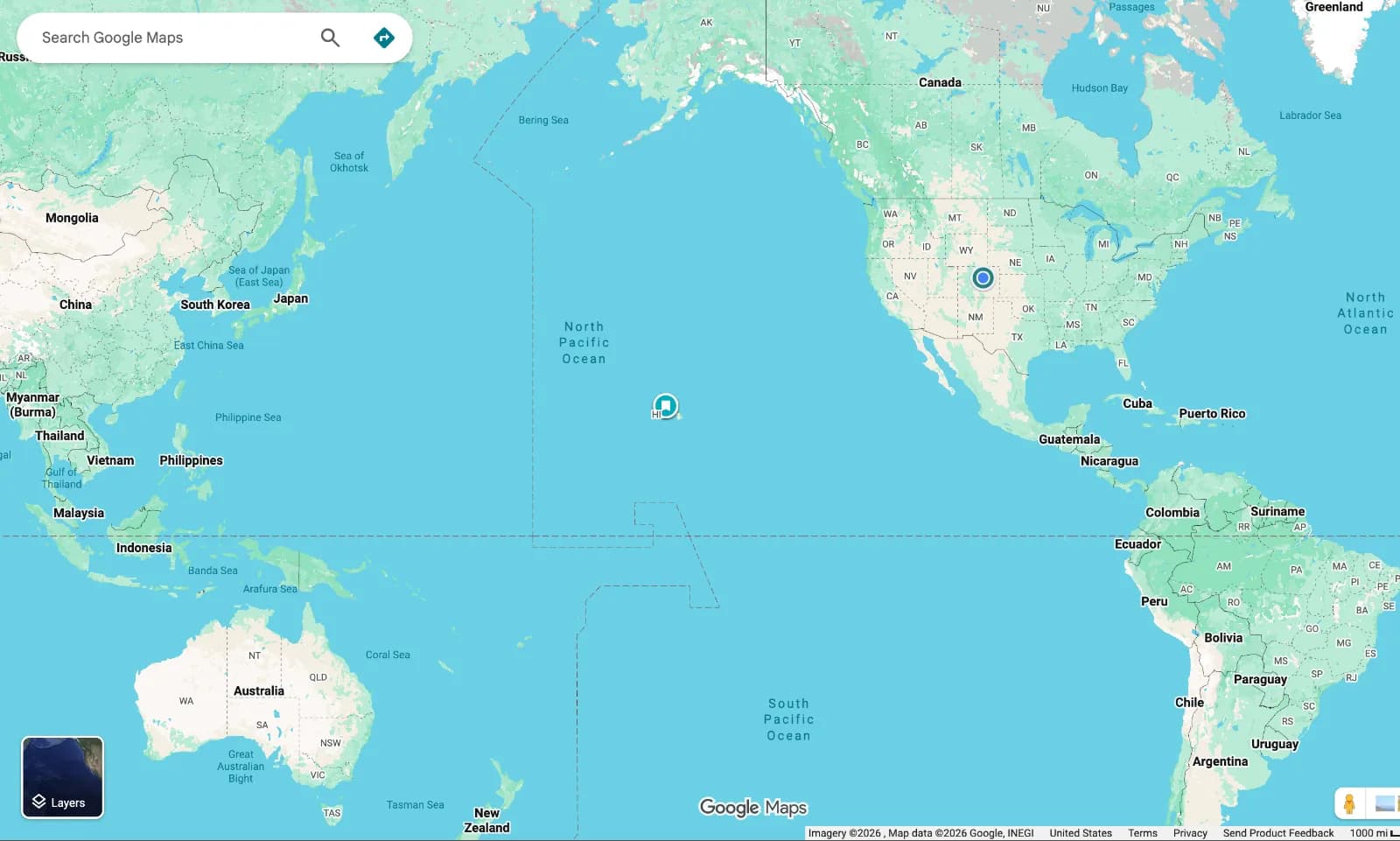
It is 2026. I am standing on a street corner in a city I have never visited before, and I feel zero anxiety. My glasses subtly highlight the path to a coffee shop that matches my specific profile. My watch vibrates to tell me my train is exactly two minutes away. I can even see a photorealistic 3D view of the cafe interior before I open the door.
To a Gen Z traveler, this is just a normal Tuesday. But to anyone who remembers the era of the Thomas Guide, it feels like we have developed a sixth sense. We did not just move from paper to pixels. We outsourced our survival instincts to an algorithm. Looking back from the vantage point of 2026, it is clear that Google Maps is not just an app on our phones. It is the invisible scaffolding of modern civilization.
1. The Death of Analog Anxiety
Before February 2005, being lost was a legitimate and sometimes dangerous physical state. If you missed your exit on a multi-lane highway, you did not get a polite recalculating chime. You got a panic attack and a frantic search for a gas station. You had to struggle with a folded piece of paper that never quite fit back into the glove box.
When the Danish brothers Lars and Jens Eilstrup Rasmussen sold their program to Google, they did more than digitize the atlas. They introduced the continuous scroll. For the first time, the world was not a series of disconnected pages. It was a fluid, draggable reality. By the time Google Maps hit smartphones, it did more than just kill the dedicated GPS industry. It turned wayfinding into a human right rather than a premium service.
2. The Invisible Engine: The API Economy
We often talk about the gig economy as a product of Silicon Valley grit. However, without the Google Maps API (Application Programming Interface), that economy would have stalled in the driveway.
The reality is simple: Uber, Lyft, DoorDash, and Instacart are essentially Google Maps wrappers with a payment processor attached.
By allowing developers to build on top of its infrastructure, Google created a digital twin of the Earth that businesses could rent.
Logistics: Every package delivered by Amazon in 2026 is optimized by routing data that accounts for real-time traffic and even the width of the delivery van.
Real Estate: Zillow and Airbnb transformed from listing sites into visual experiences. We no longer buy homes. We buy proximity to the blue dot.
3. The Edge Cases: Where the Stakes Changed
The true genius of Google Maps lies in the edge cases. It altered human behavior in ways the original creators likely never imagined.
The Geopolitical Border War
Google Maps displays borders differently depending on which country you are viewing it from. In disputed territories like Kashmir, Google adjusts the lines to comply with local laws. The map is no longer a neutral arbiter of geography. It is a dynamic political tool that reflects the reality of the viewer.
Crisis Response and Live Survival
In 2026, Google Maps is the primary tool for disaster management. During wildfires or floods, the SOS Alerts layer provides real-time evacuation routes. We have moved from asking for the nearest coffee shop to asking which road is not underwater. This integration of live satellite data has saved thousands of lives by turning the map into a living emergency broadcast system.
The Vibe Economy
We used to go to restaurants because we saw a sign. Now, we go because the Area Busyness indicator tells us it is quiet. Google Maps has effectively eliminated the bad meal. While this is great for consumers, it has created a brutal environment for small businesses. If you do not exist on the map with a high star rating, you do not exist in reality.
4. The Cognitive Cost: Digital Amnesia
As much as we love never being lost, there is a psychological toll. Neuroscientists have noted that our reliance on GPS is shrinking our hippocampus, which is the part of the brain responsible for spatial memory.
In 2026, we suffer from what researchers call digital amnesia. We do not learn neighborhoods anymore. We follow a blue line. We have traded the cognitive map for a relative map. We only know where we are in relation to the dot on the screen. We have gained the world, but we have lost our internal sense of north.
5. The Digital Ghost
With the advent of Street View and the new Immersive View, Google Maps has become a time capsule. I can go back to the street I grew up on and see the 2014 version of my childhood dog sitting on the porch.
It is a visual record of our changing planet. We use it to track urban sprawl and monitor the effects of climate change on coastlines. We can virtually walk through ruins in war zones that no longer exist in the physical world.
Final Thoughts: The Point of No Return
As I sit here in 2026, the idea of getting lost for the fun of it feels like a quaint, historical hobby. Google Maps has made the world smaller, safer, and infinitely more efficient.
We have reached a point where the map is no longer just a representation of the territory. For all intents and purposes, the map is the territory. We traded the serendipity of the wrong turn for the efficiency of the estimated time of arrival. While I sometimes miss the mystery of the unknown road, I would never trade back the blue dot. In 2026, being lost is no longer an adventure. It is a choice.



Responses (0)